A store that sells made-to-order products has a different job from one selling standard stock. The shopper is not just choosing an item; they are choosing colours, sizes, wording or a style, and they often want to be sure it can be done before they pay. If the store does not explain this, they phone, email or leave.
I faced this directly in the Silky Bouquets redesign. Almost everything in that shop is made to order, and many purchases are for funerals, so the store had to be clear, calm and reassuring. These are the design lessons that apply to any personalised-product store on Shopify.
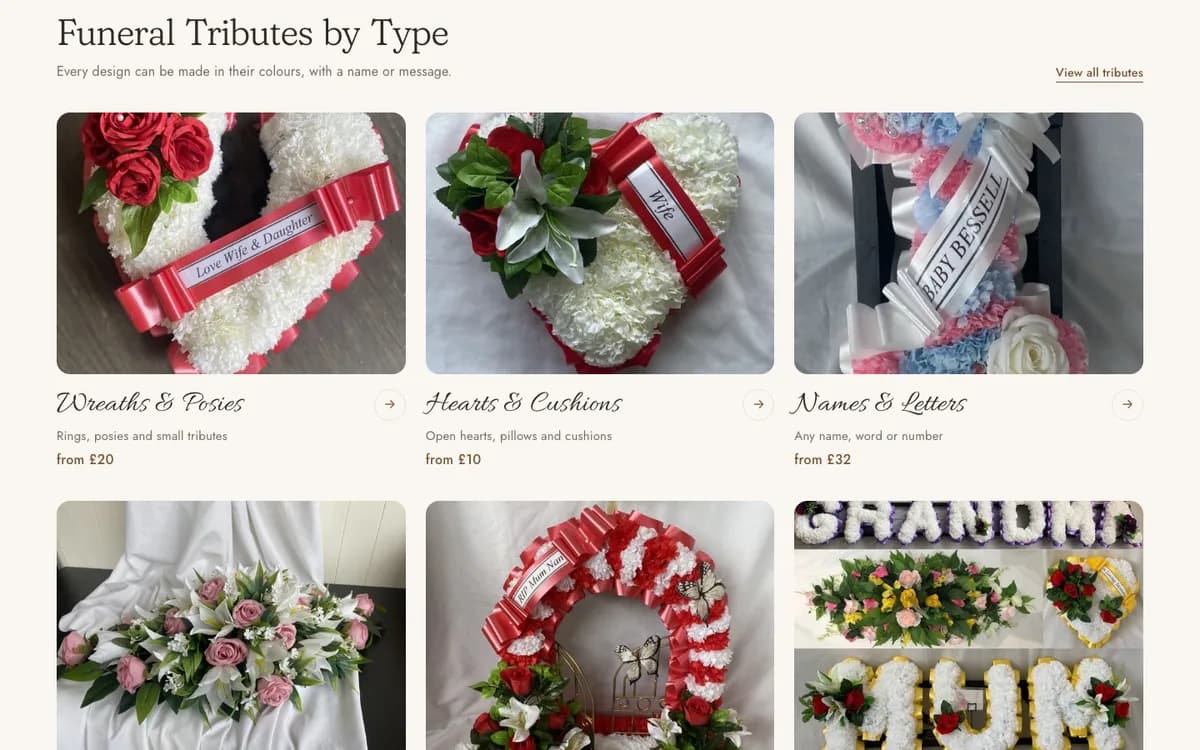
1. Say what can be changed, up front
The most common frustration with personalised products is not knowing what is possible. State it plainly where people are already looking: on the homepage, on collection pages and near the buy button. A line such as "anything you see can be made in different colours, sizes or wording" removes a whole category of doubt.
- Which parts can be changed: colour, size, wording, ribbon, style.
- How to request it: a field at checkout, a note, or a phone call.
- What happens if the shopper does not ask: the item is made as shown.
- Any limits, such as the length of a message.
2. Organise by the reason for buying
Shoppers rarely think in product categories. They think in occasions: a funeral, a wedding, a birthday, Christmas, a gift for the home. On the Silky Bouquets homepage a section called "What Are the Flowers For?" lets visitors start with the reason and be taken to the right collection. It is the same store, reached by a more natural route.
Store structure goes further than the homepage. Collections, menus and filters all need to match how customers think, which is covered in Shopify navigation and collections for a large catalogue.
3. Show starting prices early
When the price depends on the size or the options chosen, showing nothing until the last step feels evasive. Showing "from" prices on category cards helps shoppers decide where to look and avoids sticker shock later. It is also honest: the final price is confirmed in the basket.
4. Answer the questions people always ask
Put the common questions on the page, not behind a contact form. For a store like this they are predictable.
Questions a made-to-order store should answer
- 1How fast will it arrive?
Order cut-off times, dispatch time and any rush option.
- 2What does delivery cost?
Free thresholds and any extra charges, stated plainly.
- 3Can I choose the colours?
How to specify them and what happens by default.
- 4Can I add a name or message?
Extra cost, length limits and how to supply the wording.
- 5Can it go to a specific address?
For example a funeral director, and what details to include.
- 6Who do I contact?
A phone number and email that are easy to find.
5. Keep sensitive purchases calm
Some shoppers arrive upset or in a hurry. Design for them. Use plain language, generous spacing, a quiet colour palette and no pushy pop-ups or countdown timers. Make the next step obvious, and give people a human option, such as a phone number, close to where decisions are made.
6. Make product pages do the explaining
Personalisation belongs on the product page, close to the buy button, not buried in a policy. The principles of a good product page, from clear photos to honest details, are in What a Shopify product page needs before it can sell. Add to that a clear place for the shopper's choices and a note on what happens next.
Frequently asked questions
Can Shopify handle personalised products?
Yes. Options, notes and personalisation fields can be added to product pages, and the store can be structured to make the choices clear. The right method depends on how much customisation your products need.
Should I show every option on the product page?
Show the choices that affect the product and price. Anything rare or complex can be handled through a personalisation request page or a phone call, linked from the product.
Do made-to-order stores need a different checkout?
Usually not. The checkout can stay standard. What changes is the information shown before it: lead times, personalisation details and delivery rules.
Building a store for personalised products?
Store design, theme customisation and migration are covered in the Shopify development packages. If your products are made to order and the store is not explaining that well, send me a message and I will take a look.